Some of the most beautiful work of this craftsman, and many others, are in this book “Liège Gunmakers through their Work. 1800 - 1950”.
For more detail see: LIEGE GUNMAKERS
Fagnus & Clément
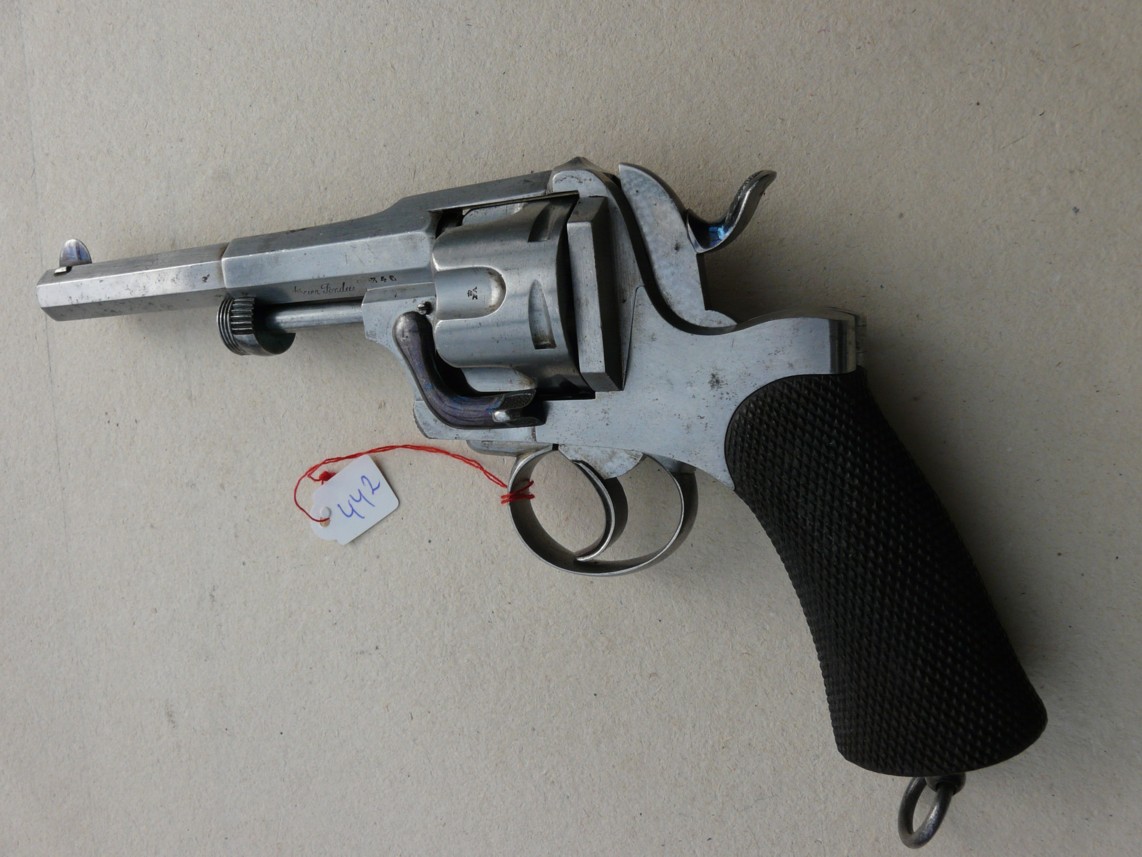
Here is a revolver from the gunsmith Alexandre Fagnus in
Liège.
This weapon is very well known, and specialized literature abounds with
information about it; see, for example, a very comprehensive study at the
following link:
https://www.revolver1873.fr/revolver-fagnus-maquaire.php
Initially, the idea was to develop a revolver similar to
the French 1873 regulation model, but with improvements, the most notable being
tool-free disassembly and a rebounding action. This revolver is particularly
renowned in France, where it was long misleadingly referred to as the "Maquaire
Revolver." Amédée Maquaire was a Parisian wholesaler and director of the
Maquaire sewing machine company. In 1887, he presented this revolver (perhaps at
the request of A. Fagnus?) to the Vincennes commission, hoping it would become a
standard issue weapon, as a government order would be a significant achievement.
The true inventor was Alexandre Fagnus, an arms manufacturer located at 9 Rue
des Célestines in Liège (1861-1868), who filed seven Belgian patents for
revolvers, including the patent dated December 15, 1876, for the present weapon.
He then established a company called Fagnus Alexandre & Cie (1870-1879) at 31
Rue Jolivet in Liège, which later became Fagnus & Clement (1879-1883). The firm
was then taken over by Charles Clement.
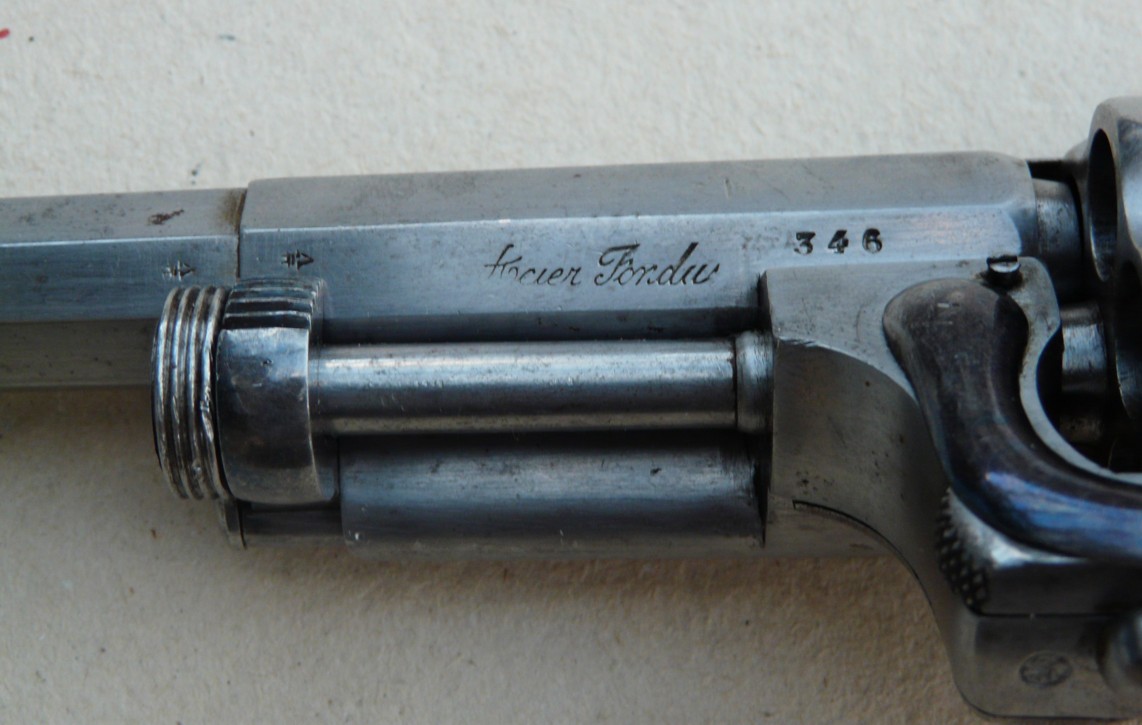
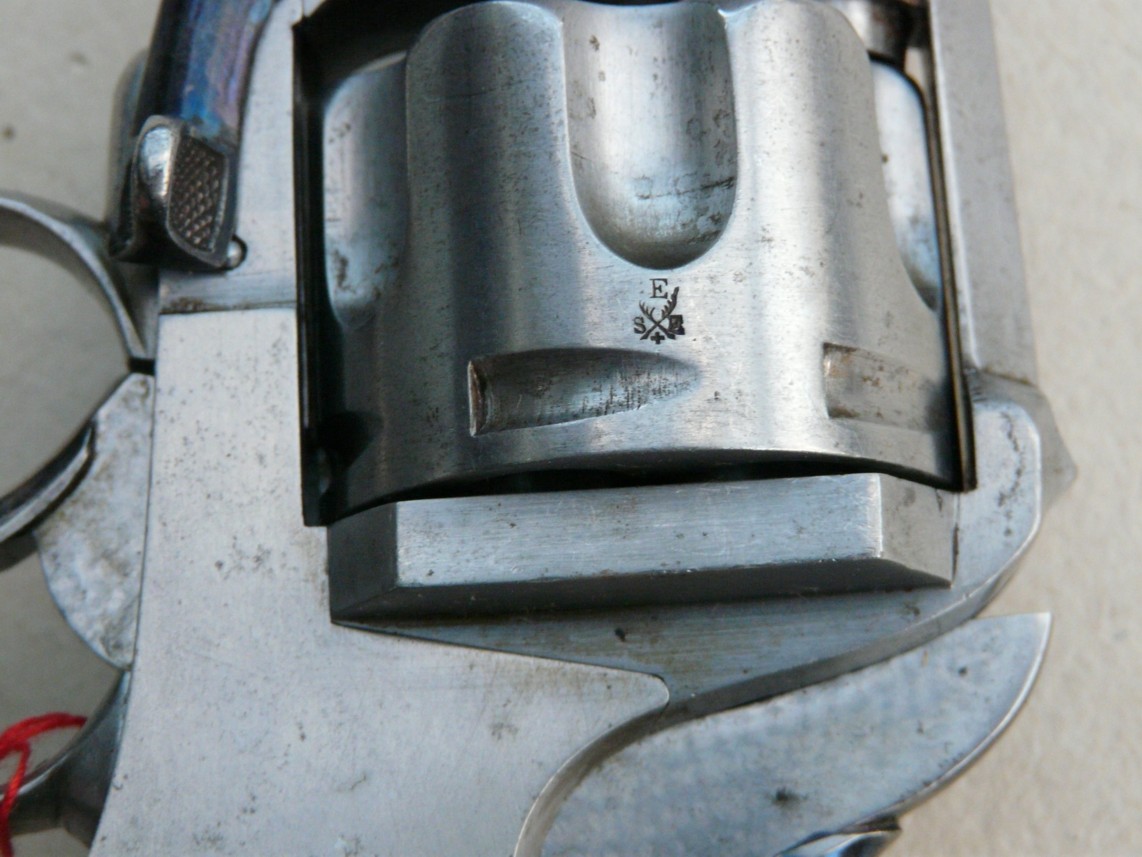
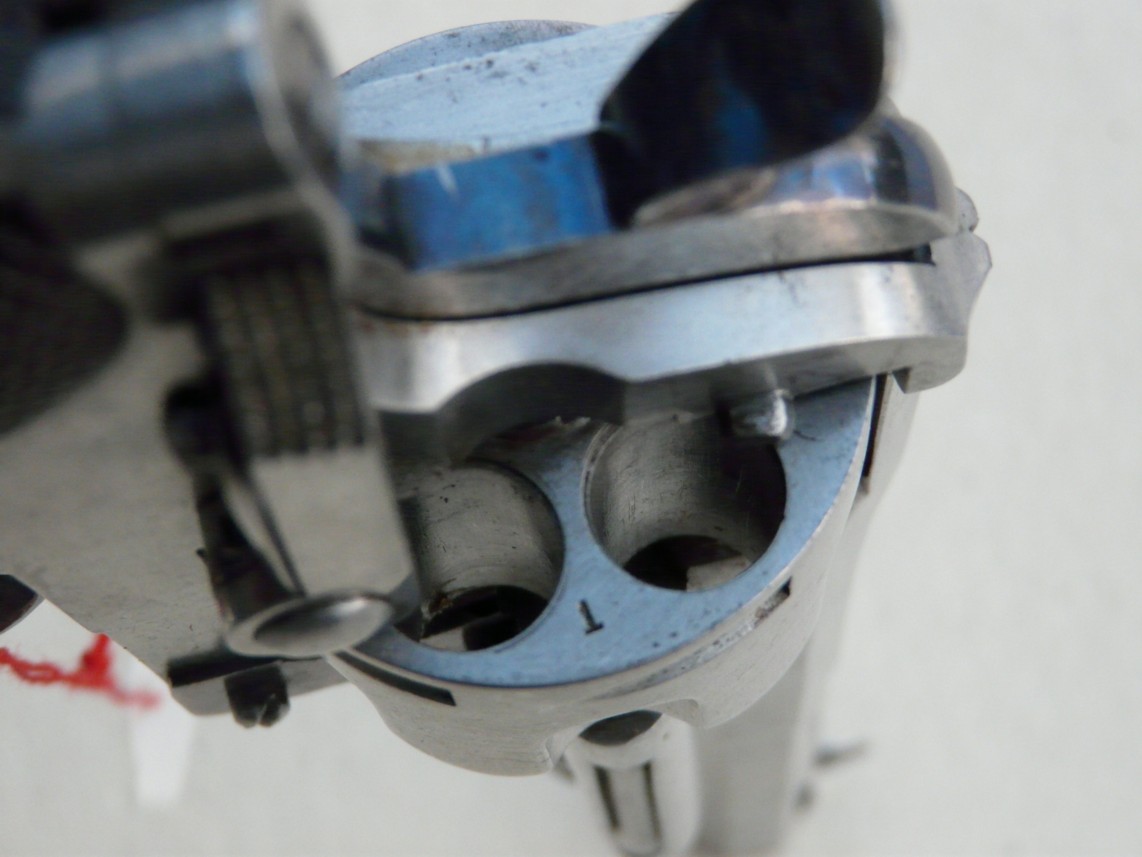
The revolver examined here bears the typical markings and
proof marks of this series of weapons:
346: serial number.
Cast steel (barrel).
Starred V: appears to be a countermark of a post-1877
inspector.
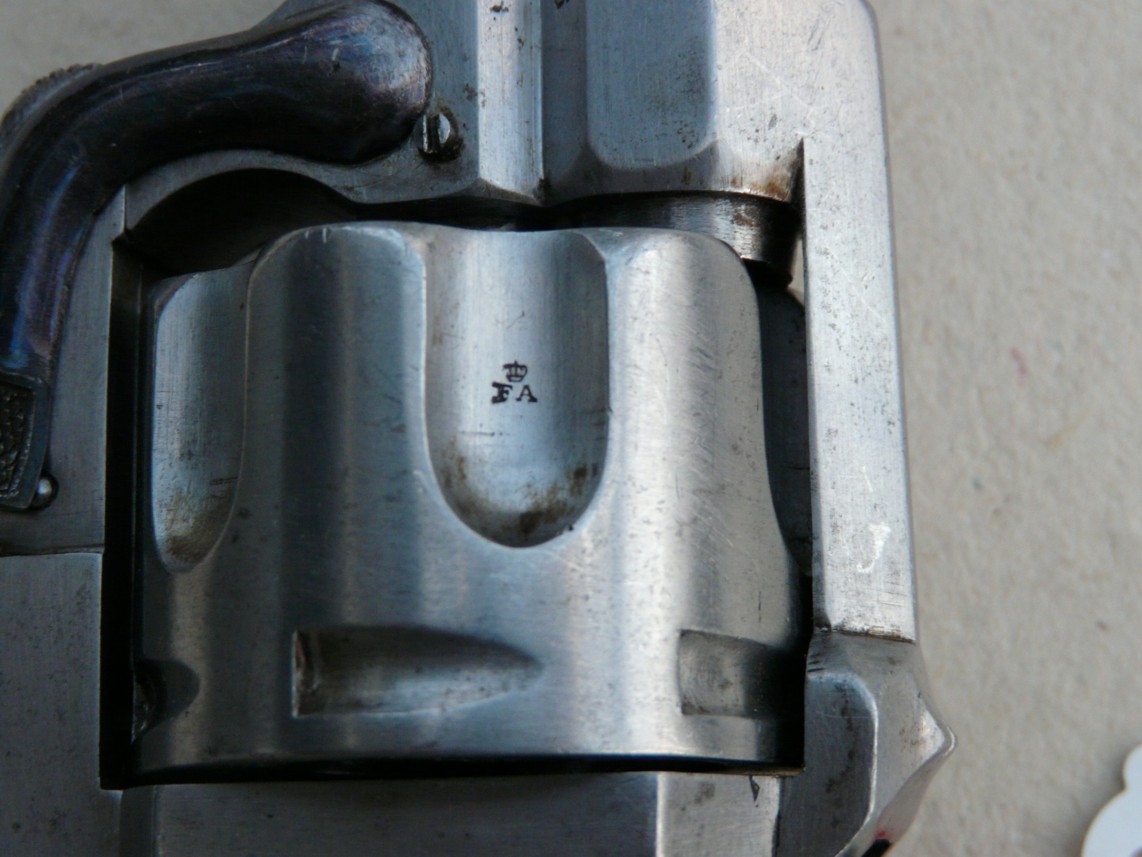
Initials FA under a crown (cylinder). Without guaranteeing
its authenticity given its location, it could be the crowned FA (Fabrica de
Armas) inspection and acceptance mark of the Portuguese authorities, as with the
weapon described at the following link:
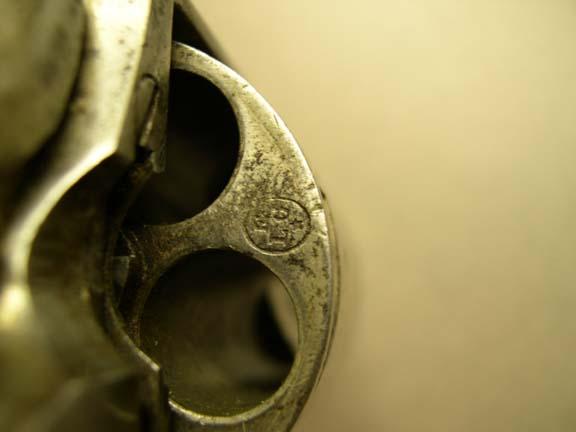
Saint-Étienne proof mark (cylinder).
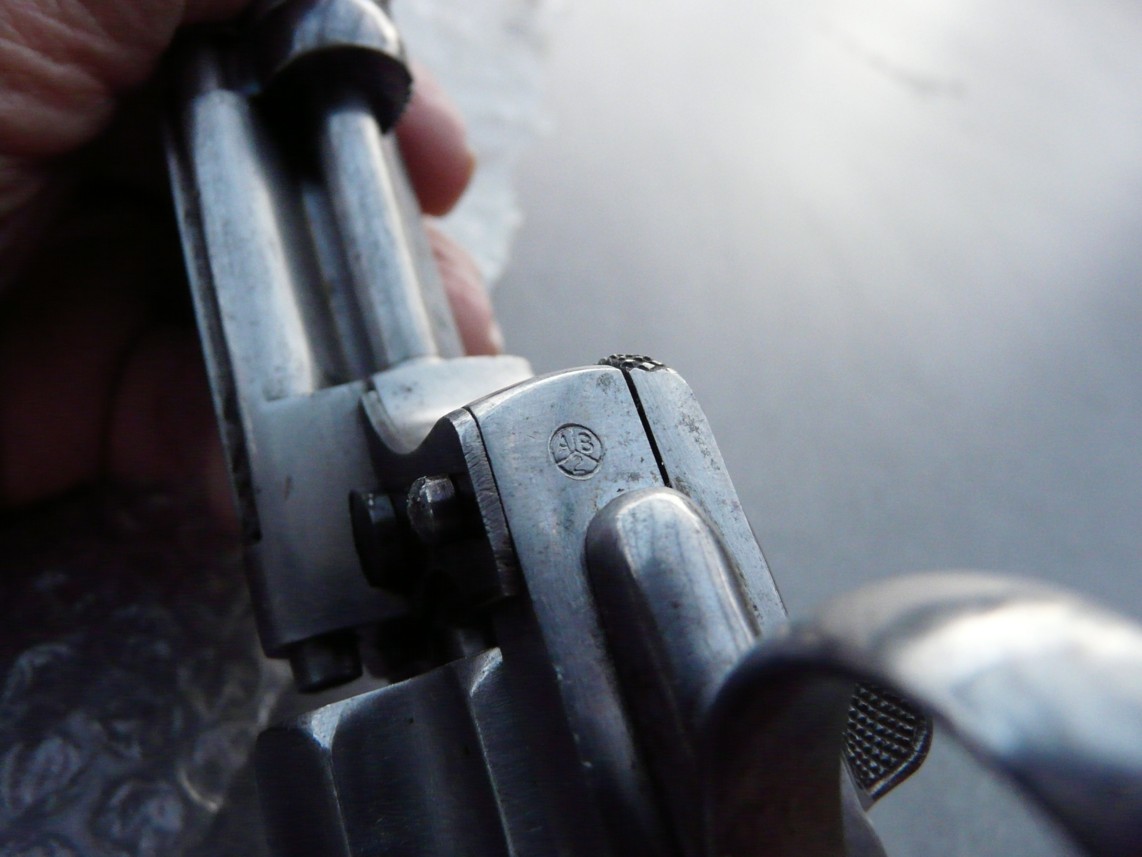
AB2 logo in a circle, unidentified marking.
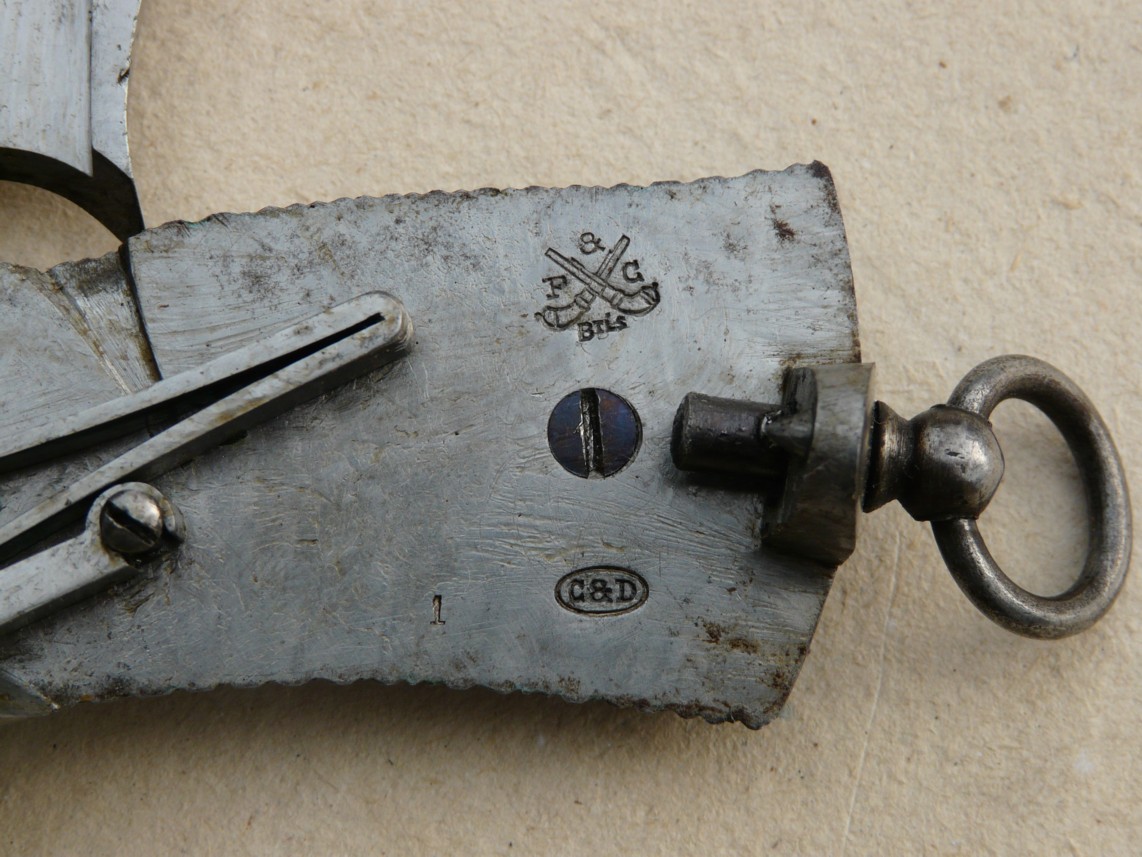
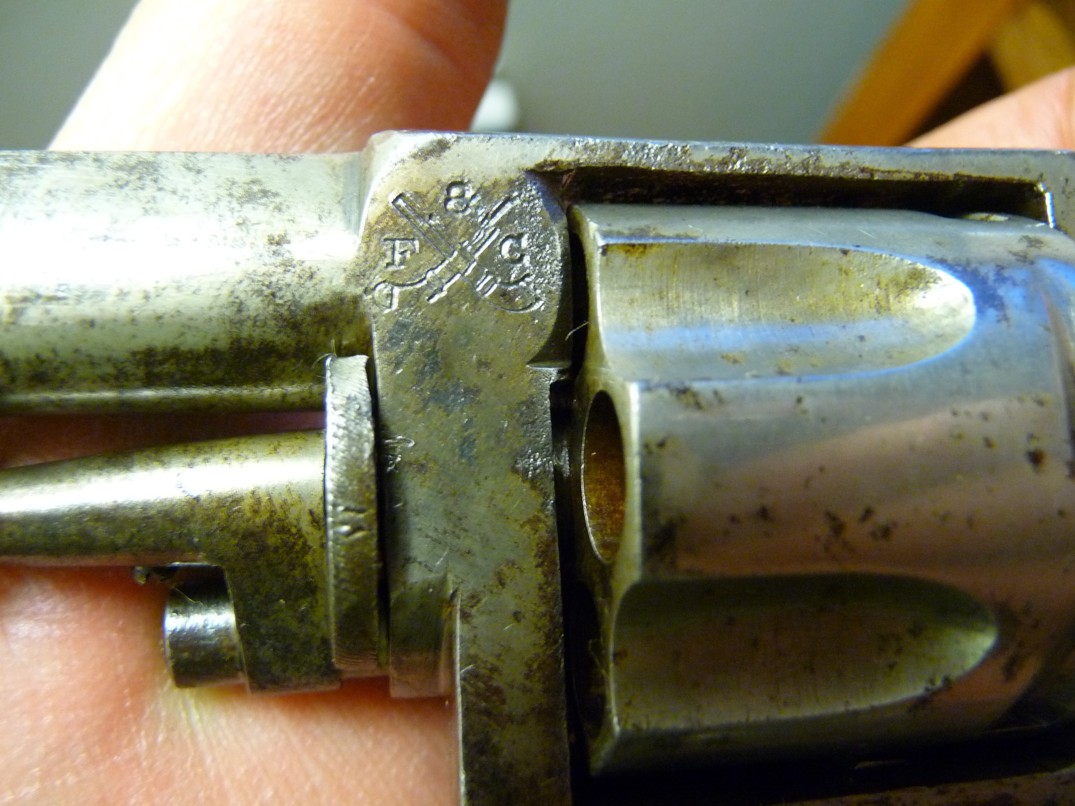
F&C Bté logo between two pistols, under a plate:
signature of the firm Fagnus & Clément.
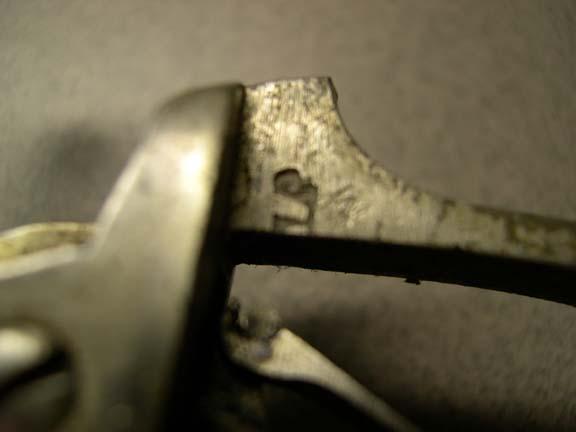
C&D logo in a horizontal oval, under a plate.
Regarding the C&D brand:
According to Guy Gadisseur on the website: “…we (almost)
all know that FAGNUS created a company with Charles CLEMENT, which leads me to
believe that CLEMENT likely manufactured revolvers for FAGNUS. I therefore
hypothesize that C&D in an oval stands for CLEMENT and DOLMAN, the latter
surname belonging to CLEMENT's wife, née J. DOLMAN. She seemed quite familiar
with the business, since after Charles's death, she took over the company with
Victor LOISELET.”
Another interpretation: “The CD hallmark, also present,
obviously owes nothing to the competitor Chamelot Delvigne. It is attributed by
Dirk Ziesing to the Colombier and Dumoulin partnership (GdA 326 p. 48), which
supposedly supplied numerous revolver frames, including those for Fagnus.”
However, the "Who's Who" directory of the Liège gunsmiths, owned by Michel
Druart and Guy Gadisseur, lists the association in question under the name
Dumoulin-Colombier, active at the Liège proof house from 1849 to 1877. One might
therefore have expected a D&C marking rather than a C&D one. No doubt the
mystery will eventually be solved. "We have no information on the caliber of
this example. Fagnus revolvers were produced in most black powder metallic
cartridge calibers of the late 19th century, but primarily in the standard
11.73mm. This weapon was likely manufactured in Belgium, even though no
photograph shows an oval ELG marking. The barrel does, however, bear a proof
mark that appears to be a countermark from a controller dating from after 1877.
Historical anecdotes: The Fagnus revolver was adopted by
the Danish army in 1880 in 9.1mm caliber, then in 9.6mm caliber from 1885. The
revolver remained in service until 1946. As a sign of its popularity, Queen
Victoria (1819-1901) gifted her grandson, Wilhelm II (1859-1941), a luxury
Fagnus revolver, which the Kaiser indeed carried on his belt, despite his
disability." (Left arm atrophied at birth) making it difficult for him to cock a
semi-automatic pistol.
Source :
https://www.revolver1873.fr/revolver-fagnus-maquaire.php
Chris, HPH, Alain
Fagnus & Clément
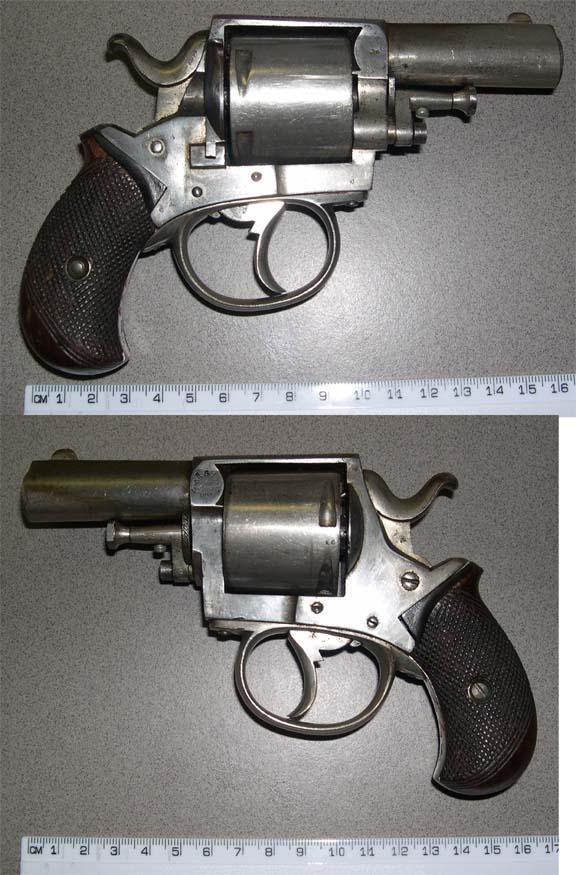
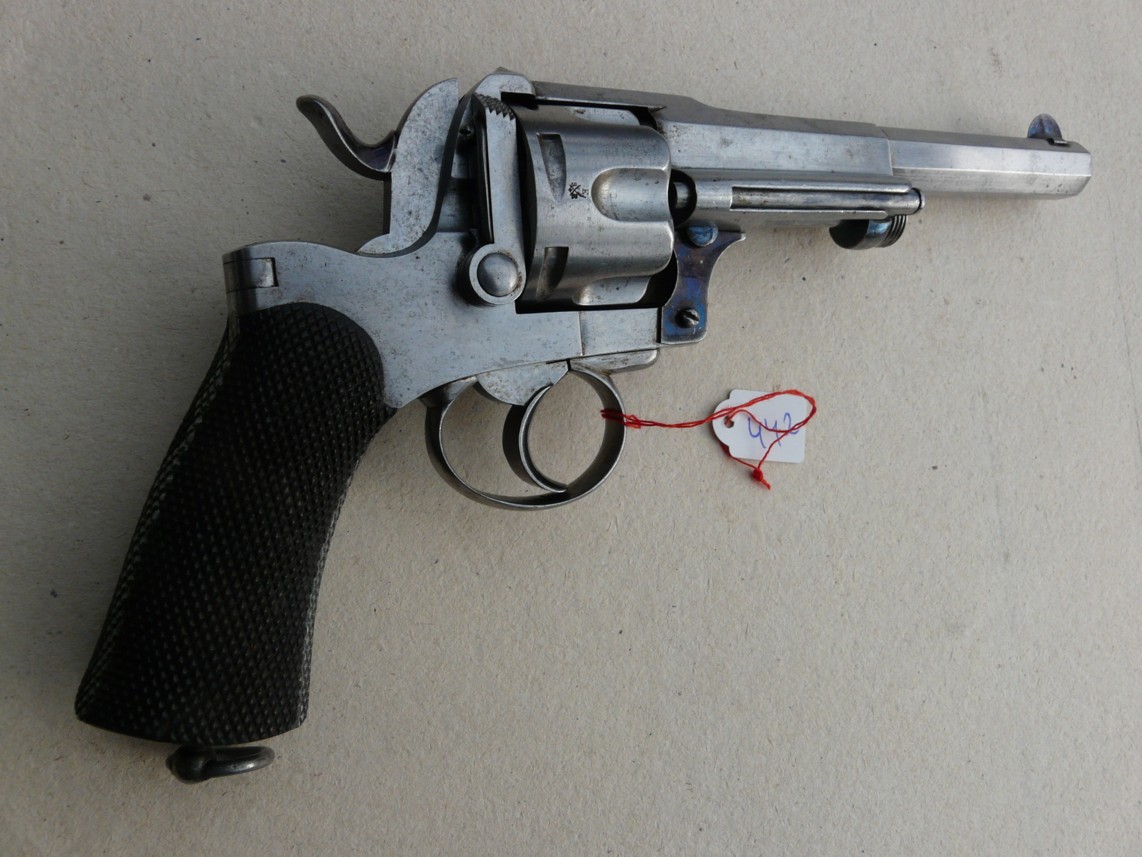
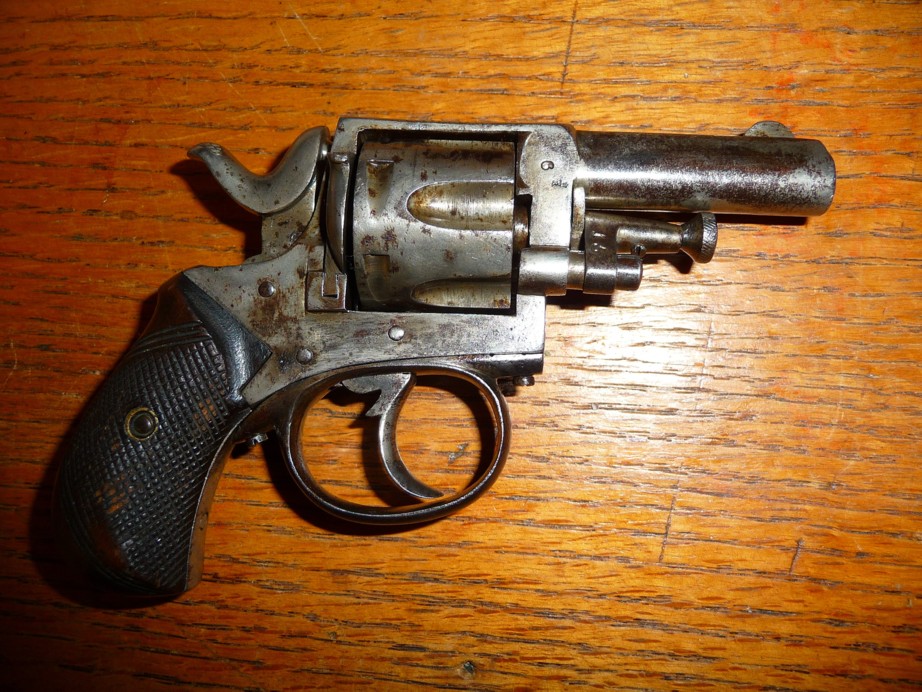
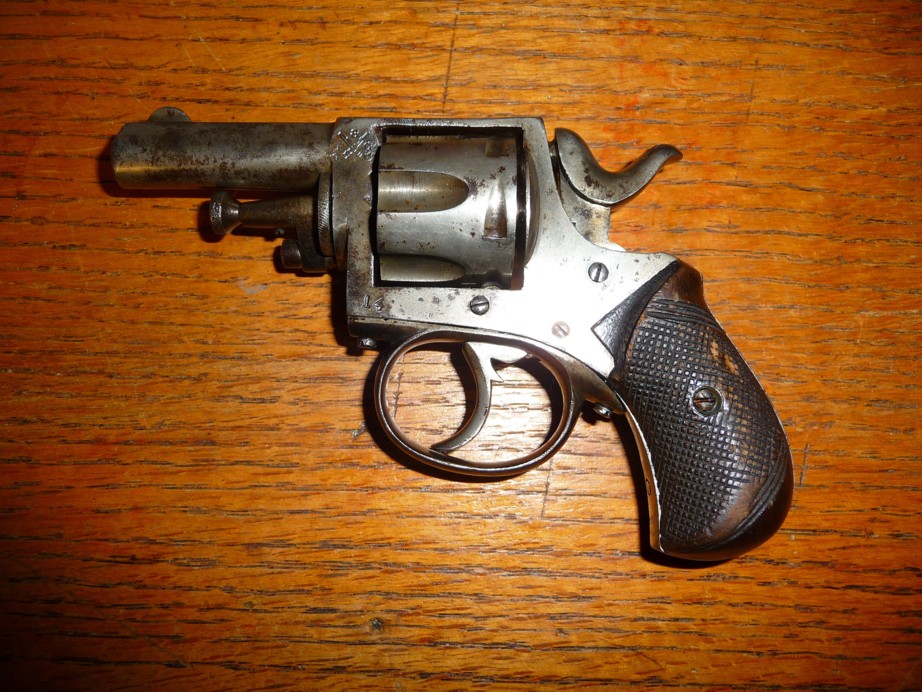
It is a revolver of type "Bull-Dog" with central percussion. If you look closely, the cylinder is six shots. The barrel is round with half-moon front sight. The cylinder is grooved and is closed by a loading door. The curved trigger is protected by an oval trigger guard. The plates seem to me to be made of wood (walnut?) blackened.
The
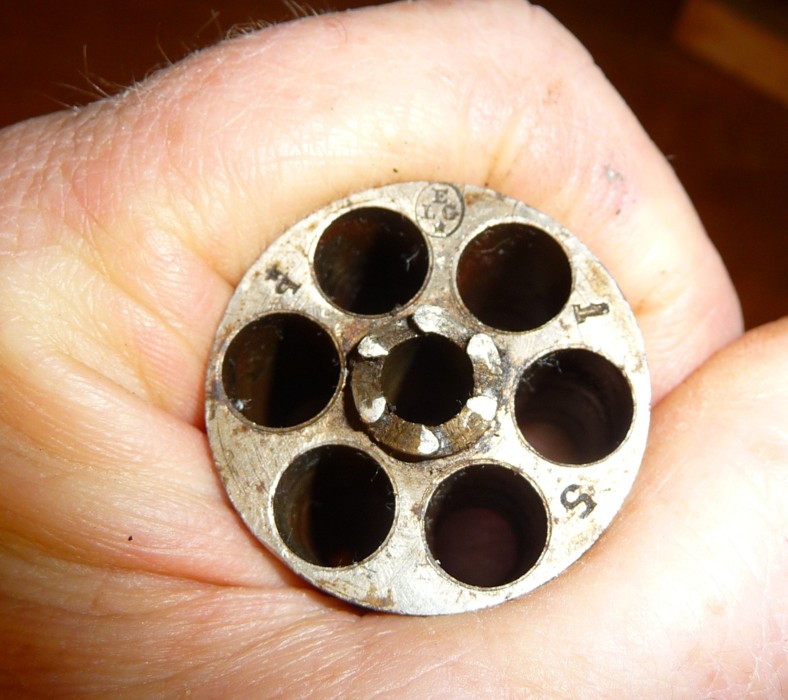
weapon carries the punches of the proofhouse of Liège, that is to say:
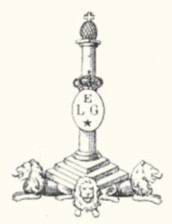
ELG* in a
vertical oval:
final acceptance, of use of 1846 to 1893.
F and Q *:
countermarks of the inspectors, in use from 1877 to 1893.
16 and 15: different numbers?
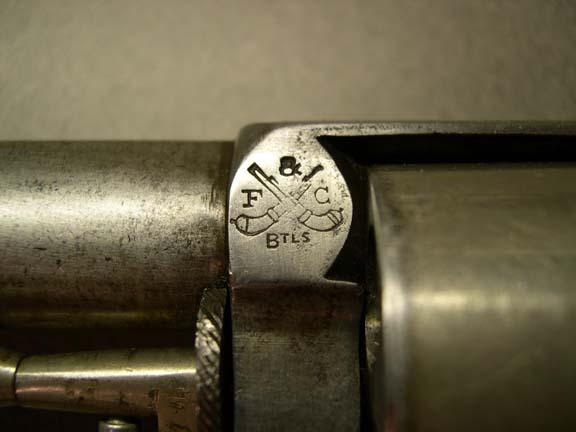
The weapon also carries a trademark of
2 crossed
pistols as well as the letters
F & G
allotted to the manufacturer
Fagnus & Clement
registered in the ProofHouse from 1879 to 1883.
GG
Fagnus & Clément
They are a copy of Liège of the famous and robust revolver R.I.C with six shots, central percussion and closed frame.
It presents a loading by side door and rod at swiveling head of nipple, placed at rest in the axis of barrel.
The lock of the type WARNANT is with simple and double action with marrowy operation.
The weapon will be produced in multiple calibers of the 450 to the 320.
This type of weapon will have a great success in the whole world and especially in Liege or arms industry had very quickly guessed the potential of this weapon.
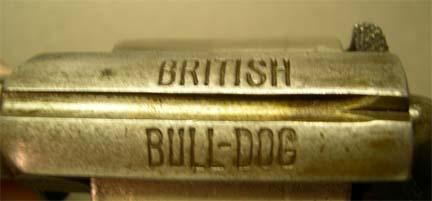
Alternatives were thus produced with profusion of which the BRITISH BULL DOG which must be regarded as a reduced version of the R.I.C.
The latter will also inspire an alternative even smaller the “puppy” but it is another history.
Your weapon presents the lawful punches of the proof house of Liege, namely:
Spangled ELG in a crowned oval: acceptance of 1846 to 1893.
T spangled: countermark of the controller post 1877.
Your weapon was thus manufactured between 1877 and 1893.
The manufacturer
The mark with the two crossed pistols surrounded of the letters F & C is unknown, but is it humanly possible for me of all to know?
It could reasonably belong to FAGNUS & CLEMENT Street Chéri in Liege, registered with the proof house of Liège of 1879 to 1883, which corresponds to the period of manufacture of the weapon.
The activities of this company were taken again in 1883 per Charles CLEMENT (see site)
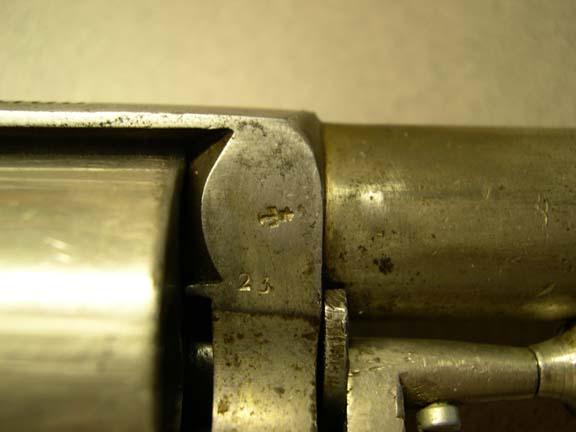
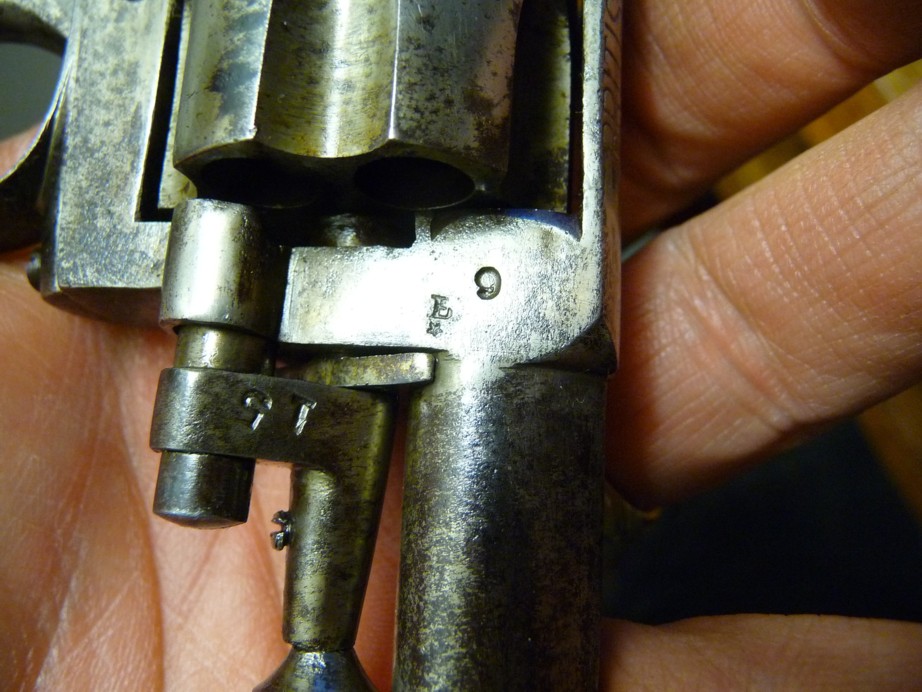
The marks M and 23 are markings of workshops to my direction, 23 being perhaps the job number.
The mark LP on the frame is also unknown for me, a mark of subcontractor perhaps?
GG