Some of the most beautiful work of this craftsman, and many others, are in this book “Liège Gunmakers through their Work. 1800 - 1950”.
For more detail see: LIEGE GUNMAKERS
Maurice ARENDT
This
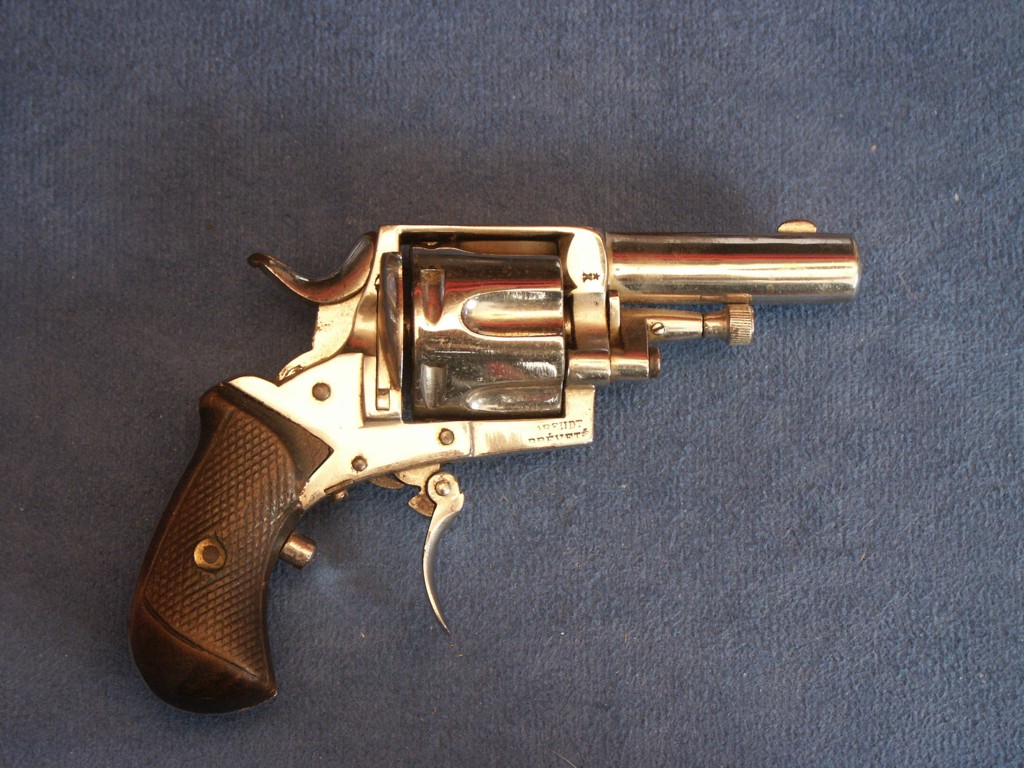
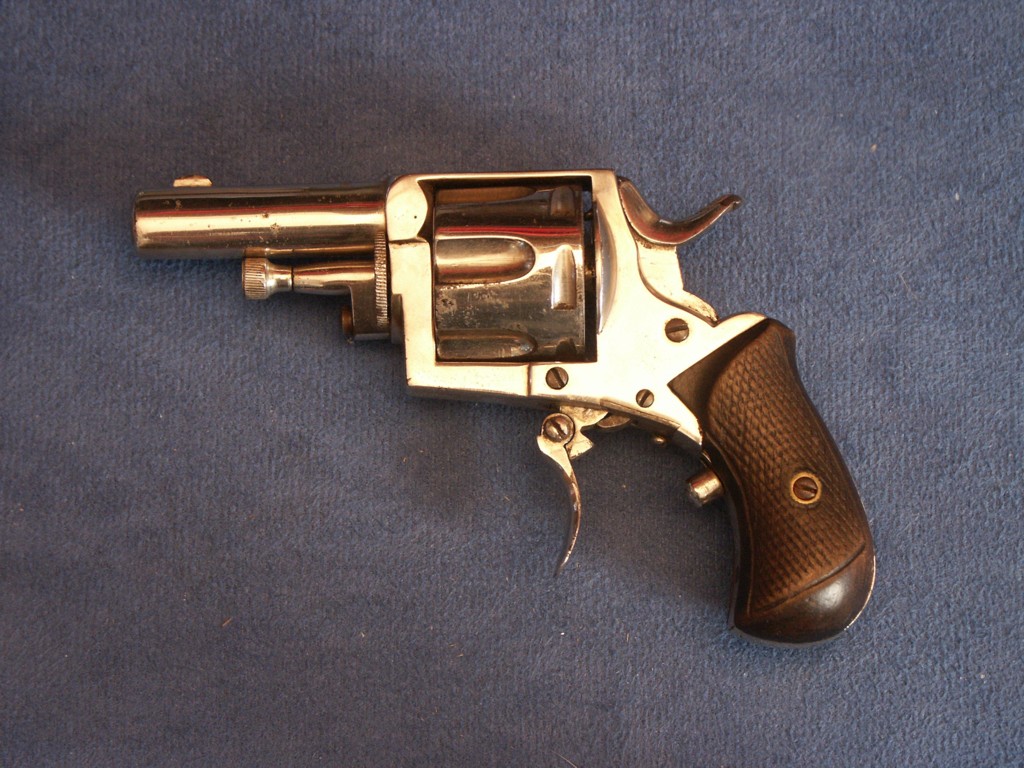
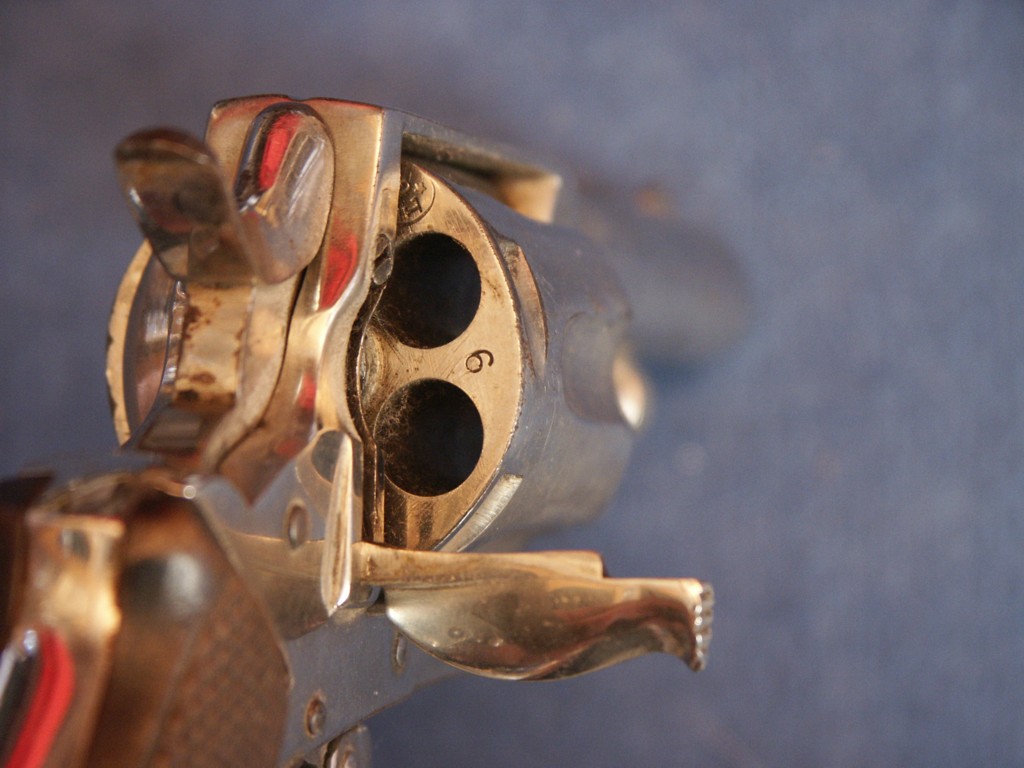
small .320 caliber revolver is clearly a product of Maurice Arendt—a gunsmith
well-documented on this site who was registered at the Liège Proof House between
1857 and 1889.
It is one
of the countless Liège-made variations of the "British Bull-Dog" design,
originally created by Birmingham gunsmith Philip Webley in the mid-1870s. Given
its small caliber, this revolver is best classified as a "Puppy" model, as the
term "Bull-Dog" was generally reserved for large-caliber weapons (10 mm or
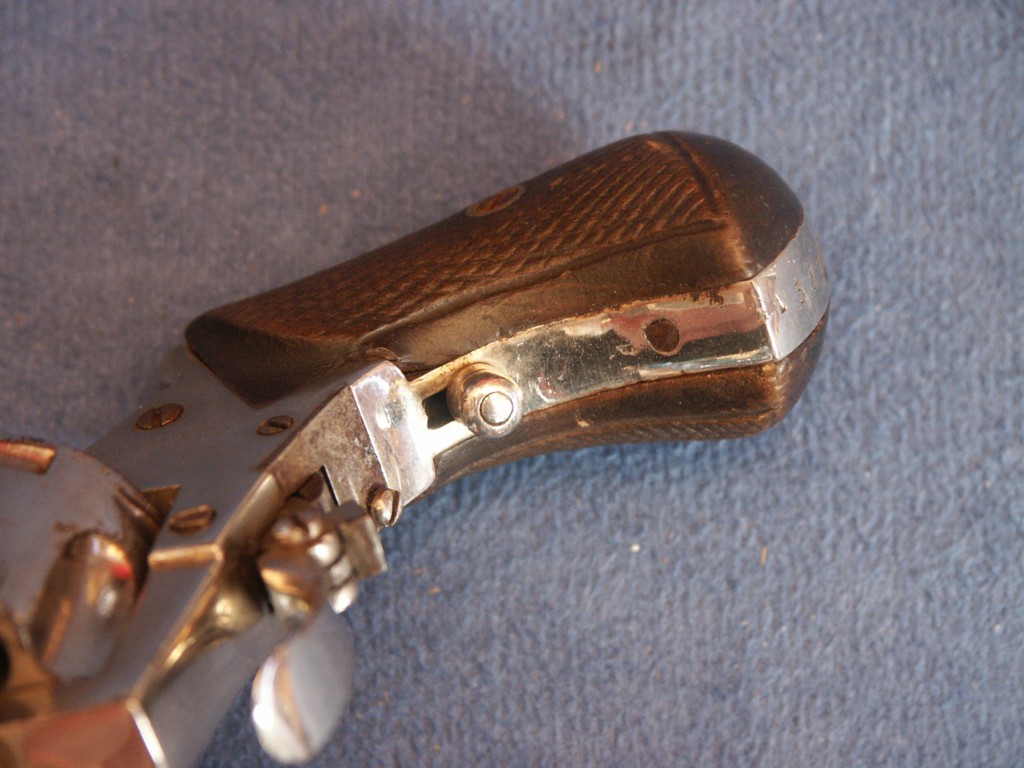
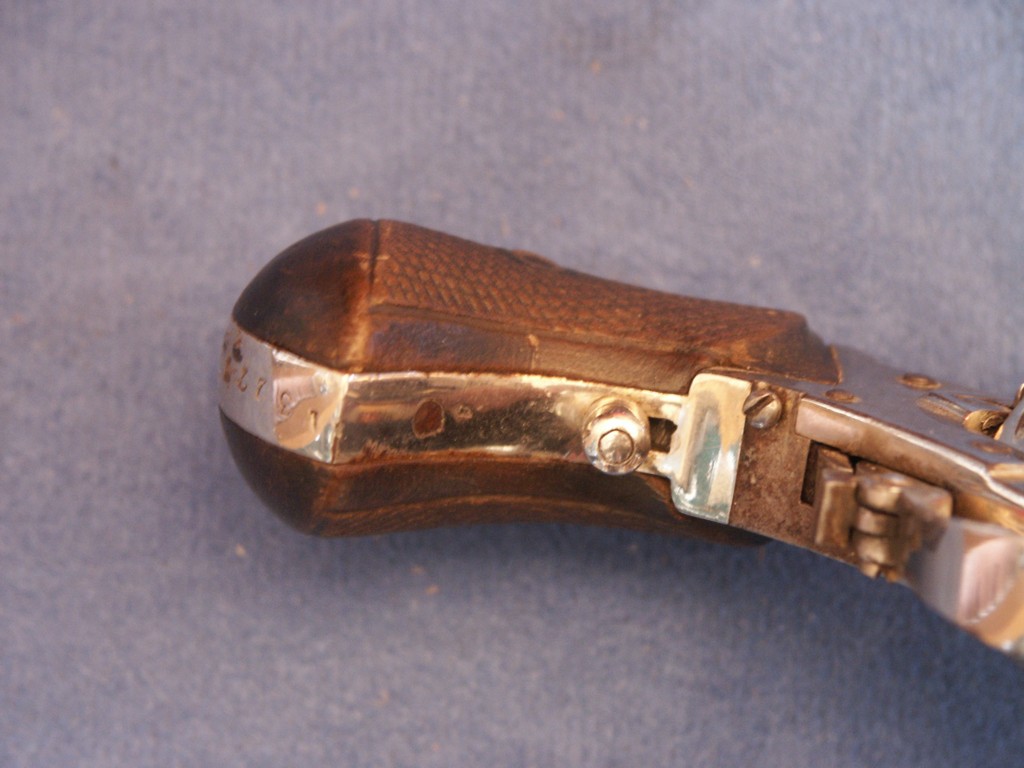
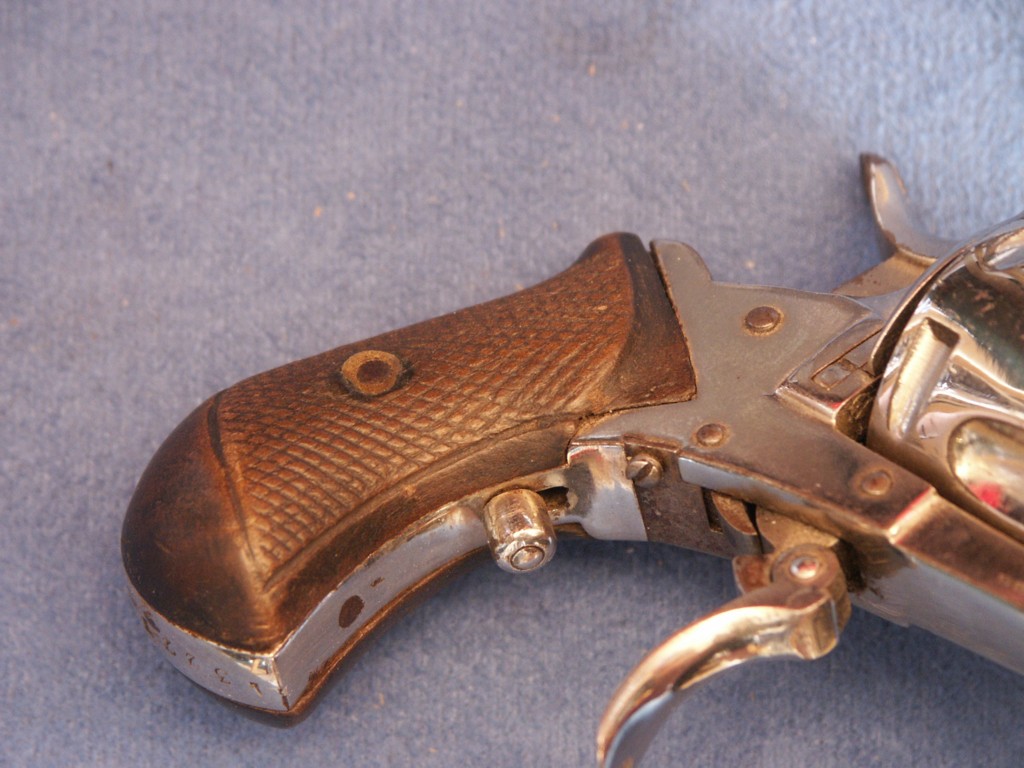
larger). It features a folding trigger for easy pocket carry, a curved grip, and
a fluted cylinder. The piece presents well, boasting a remarkably well-preserved
nickel finish and attractive checkered grips, indicating high-quality original
craftsmanship.
A
distinctive feature of this small revolver is a safety mechanism built into the
grip (controlled by a button on the front of the handle) that, when engaged,
prevents the hammer from moving.
Among the
dozen or so patents Maurice Arendt held for revolvers, two specifically mention
this type of safety mechanism:
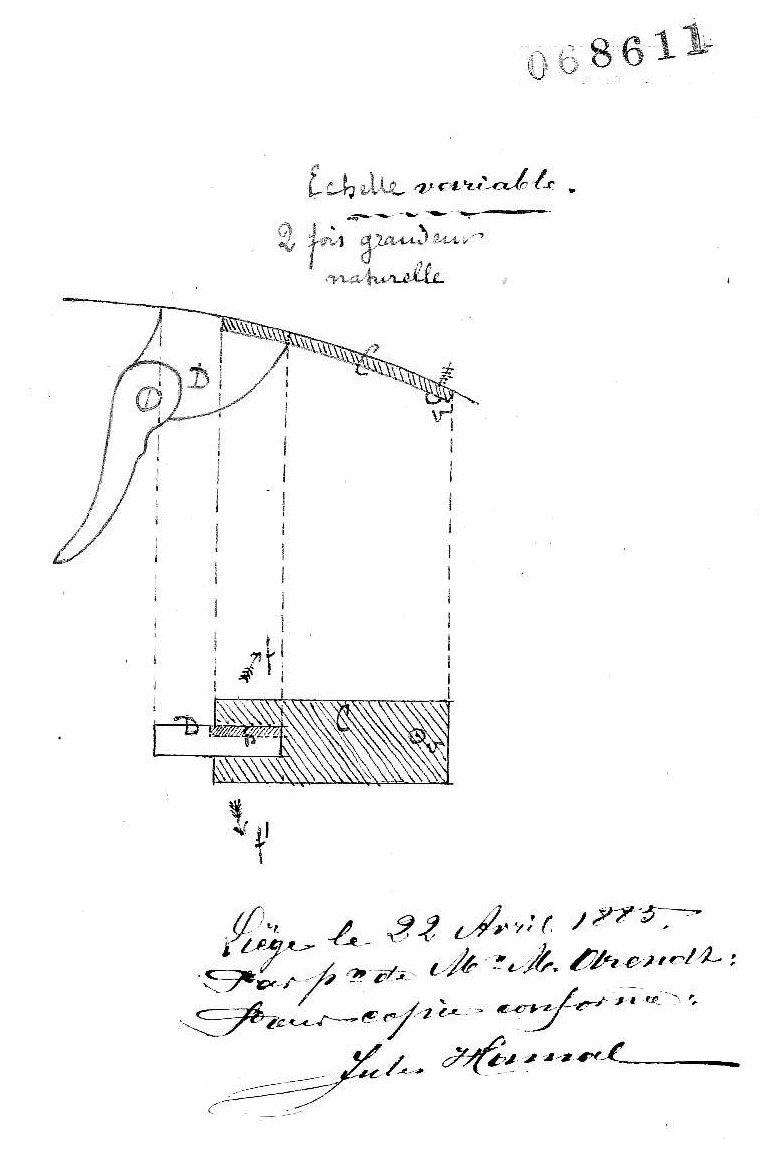
No.
068611 – April 22, 1885: Safety mechanism applicable to all revolvers.
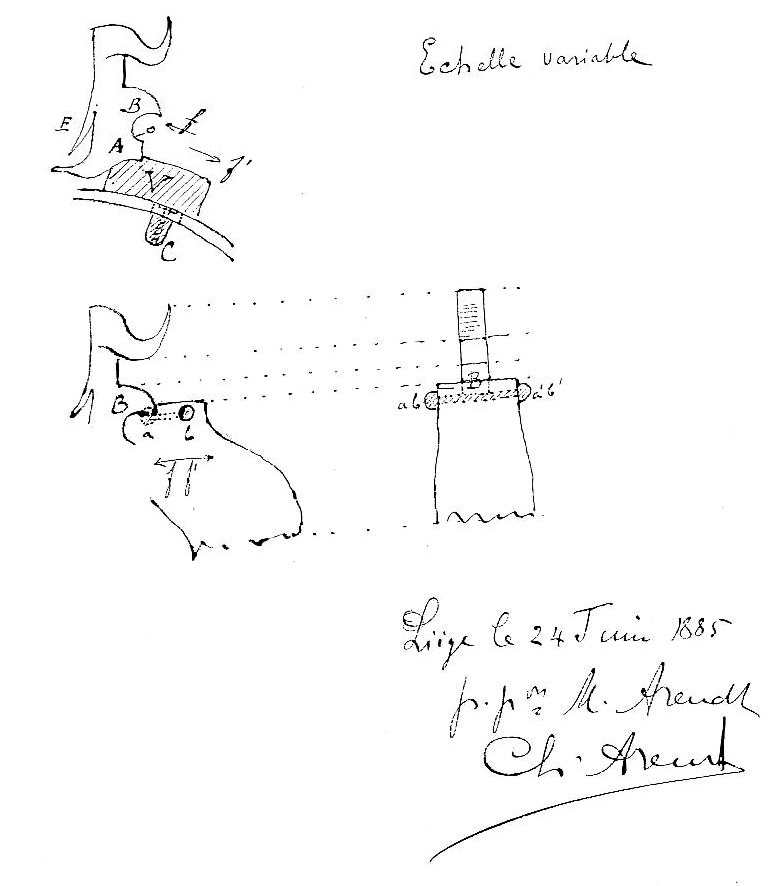
No.
069394 – June 24, 1885: Safety mechanism applicable to revolvers (main patent
No. 068611 of April 22, 1885). Markings:
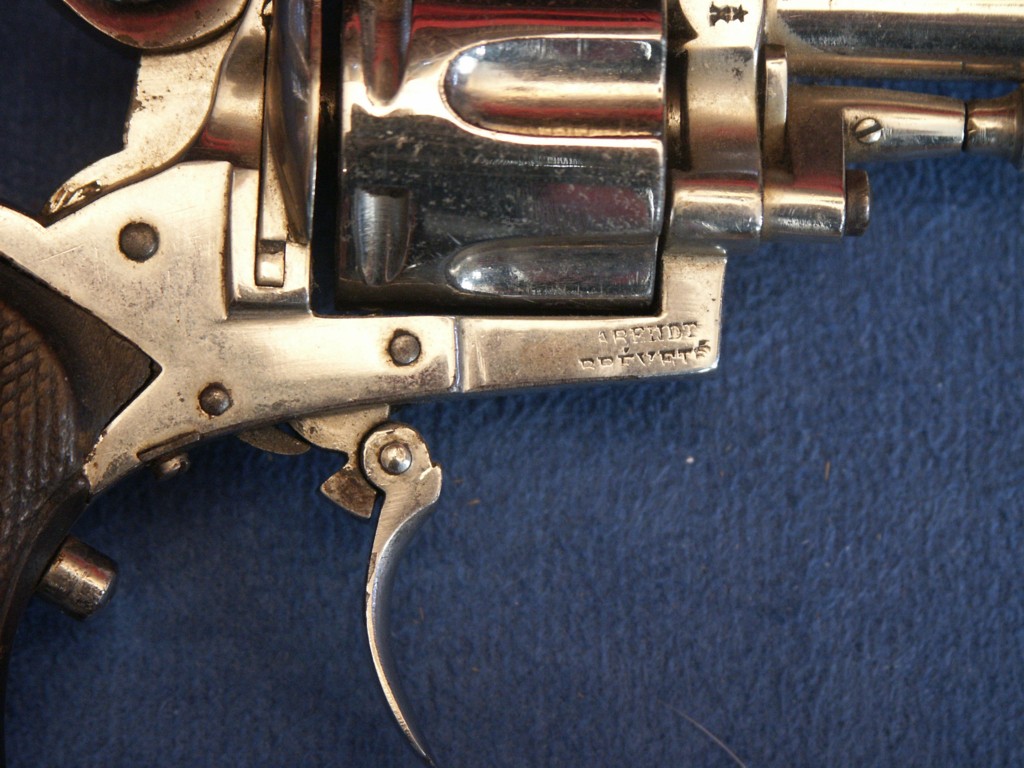
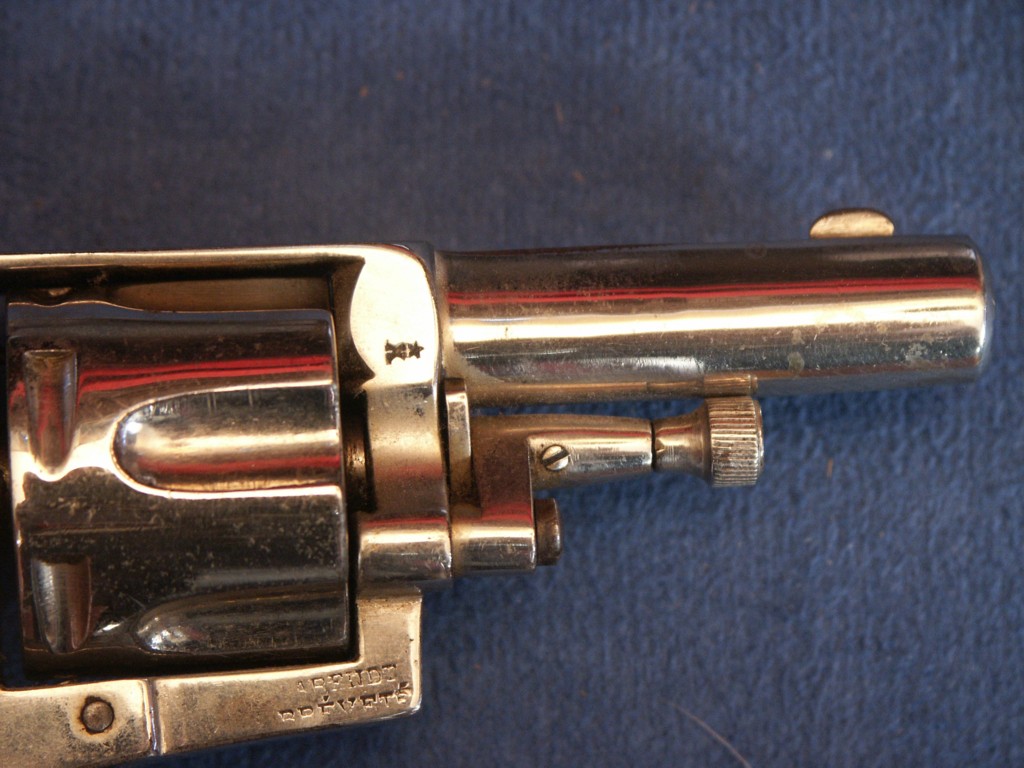
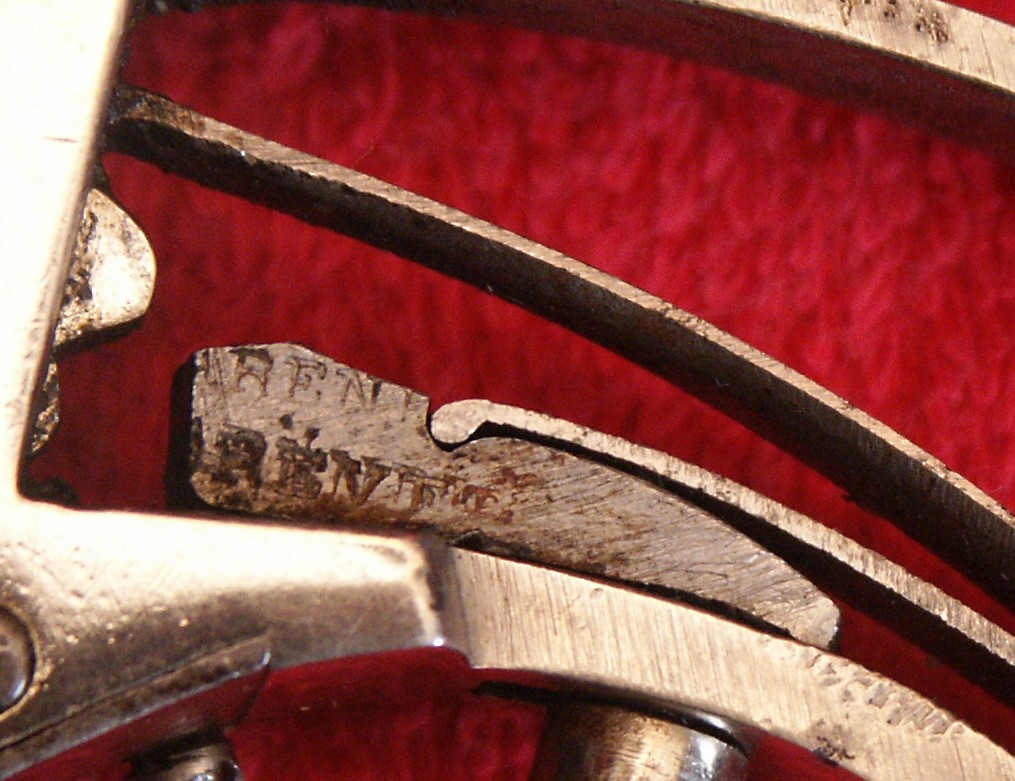
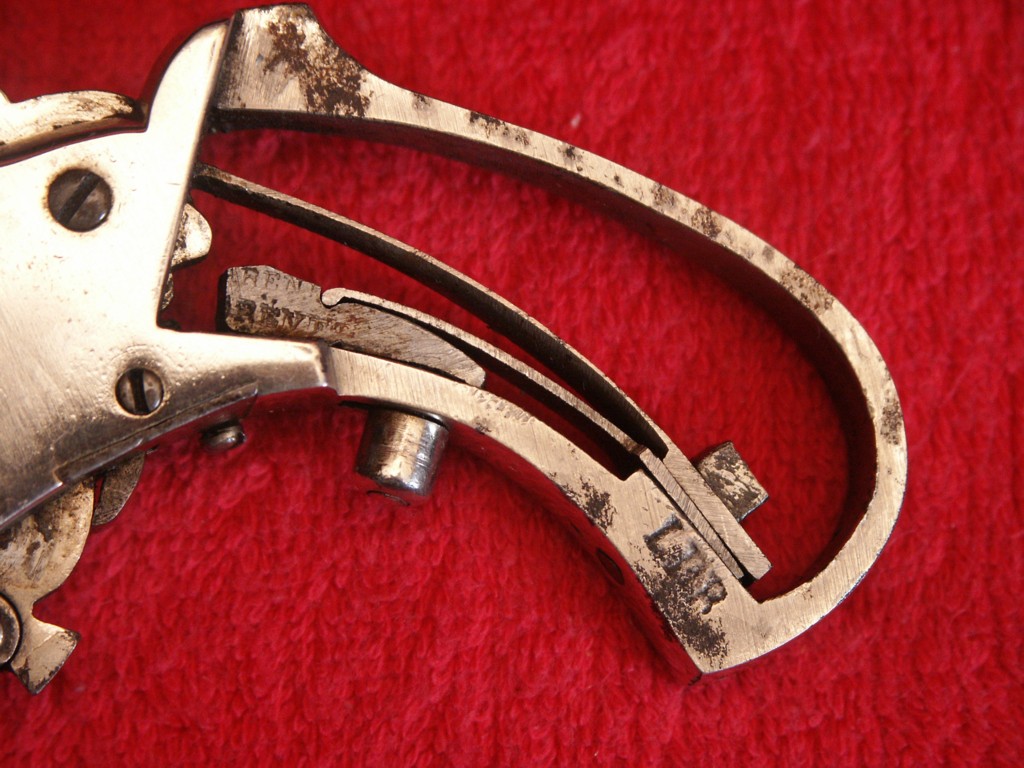
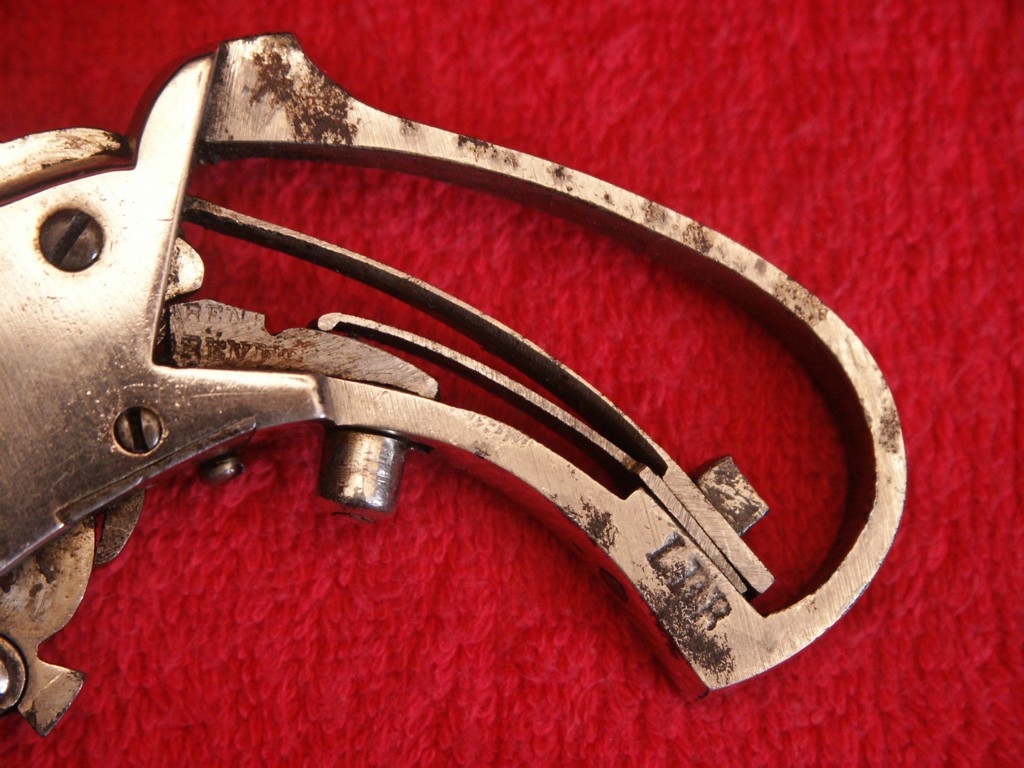
"Arendt
Breveté” on the safety mechanism (beneath the left grip panel) and on the right
side of the frame.
Initials
LDB (or LDR?) on the frame beneath the left grip panel: a subcontractor not yet
identified.
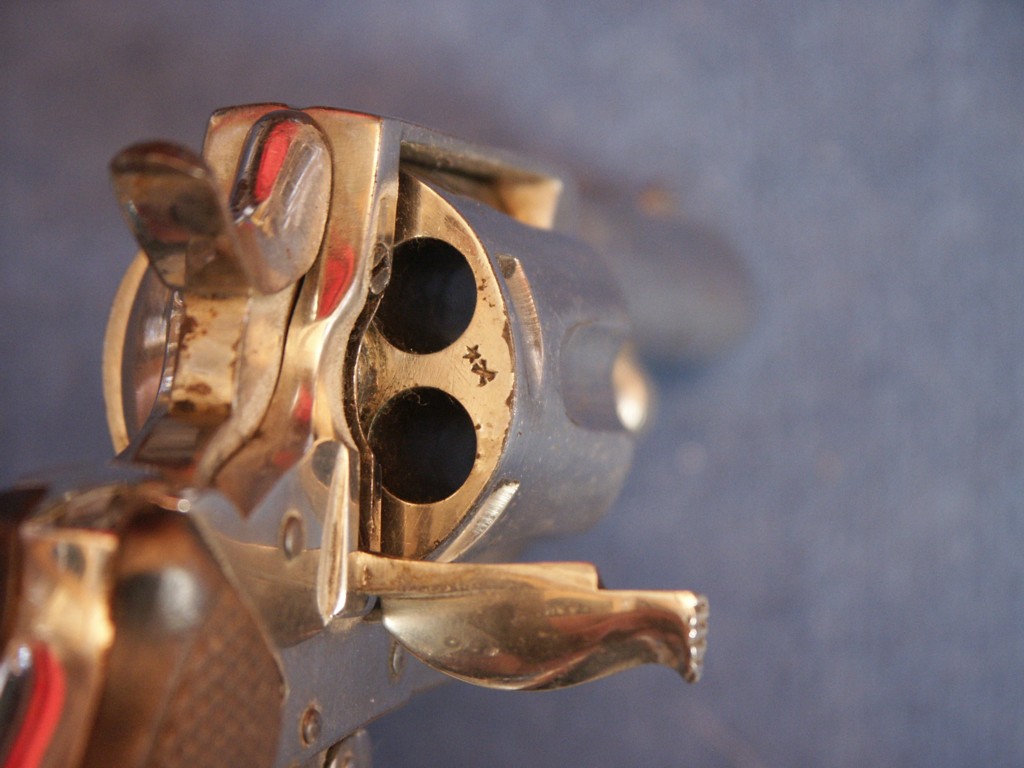
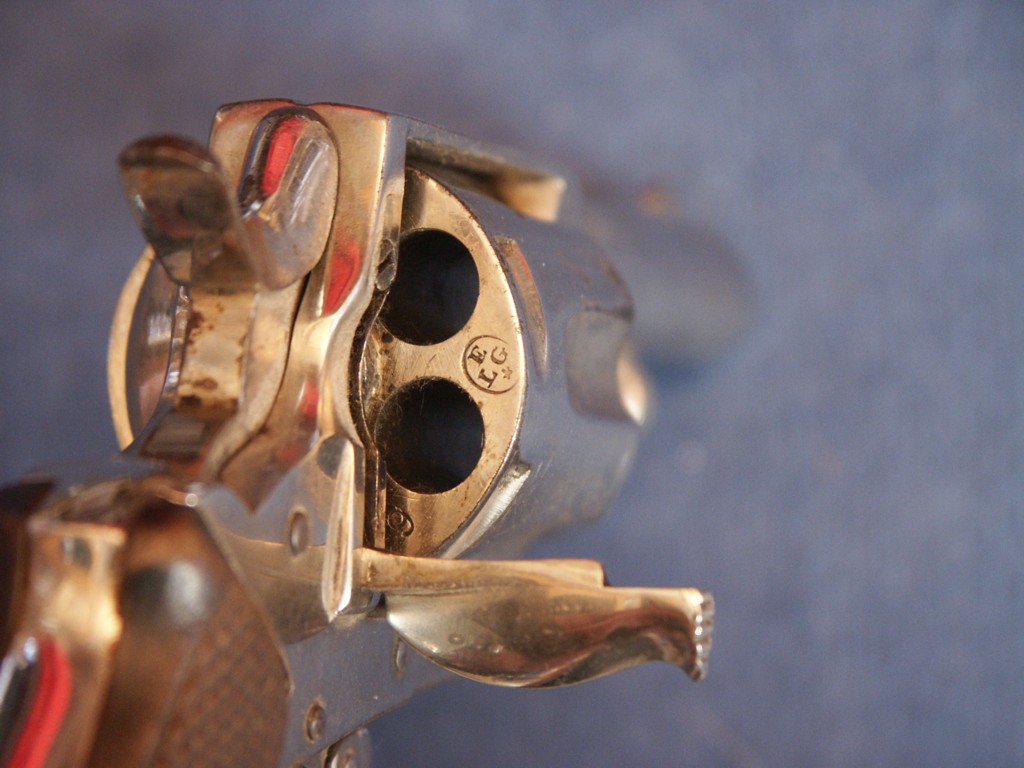
"X" under
a star, on the rear of the cylinder and the right side of the frame: inspector's
mark used from January 27, 1877.
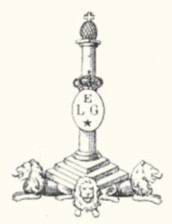
ELG under
a star within an oval: proof house mark used from September 8, 1846, to July 11,
1893.
The
number 6 on the rear of the cylinder.
In conclusion, this "Puppy" revolver originated in Maurice Arendt’s workshops.
Analysis of the
proof marks and patents dates its production to between 1885 and 1893, which is
consistent with this type of firearm, typically manufactured during the last
quarter of the 19th century.
Chris, HPH,